
Last night I finally watched It Comes At Night, an apocalyptic horror about the lengths a family will go to survive together. The story is hyper-focused on that premise. For example, the cause of the apocalypse remains mysterious—an inexplicable illness that we perceive through symptoms and the characters’ fearful behavior, never through an origin, or diagnosis, or treatment. The disease is secondary in the storytelling, but primary to the plot.

I dig the lack of explanation for two reasons. One, it pushes the audience into sympathy for the characters. We know as little as they do; their fear and desperation is more relatable. Two, it creates unsteadiness. Structurally, the story is more surprising because of the uncertainty.
Loads of audiences don’t enjoy uncertainty. It seems like most audiences expect an explanation for every unusual decision in a story. They do not want to ‘accept the mystery’. Explanations and justifications are essential to most stories. A character’s behavior is justified by their motivation. In plot, explanations provide the backbone for character motivation. We tend to prefer reasonable (if not rational) characters whose motivation can be traced back to their circumstances, personality, and decisions. When one of those key elements is missing (i.e., the explanation of an unusual setting), the audience drifts like a ship without an anchor.

Here’s another example from a movie I recently watched. (Spoilers.) Compare the endings of Interstellar and 2001: A Space Oddysey. Narratively, Cooper drifting through the black hole/tesseract is remarkably similar to Bowman in the monolith bedroom and his big trip. Both are unusual and disorienting; both end with a child saving Earth. But Interstellar’s trip is packed solid with explanation and exposition, while 2001 contains no dialogue and is bewildering. Alienating, even, because Bowman’s trip is never explained, his connection to the setting (How did he get there? Where is there? Is this real?!) is never explained, and the arrival and nature of the Star Child is never explained. Kubrick is painting broadly: the mystery of humanity’s existence and journey across the cosmos. On the other hand, Nolan uses Cooper and Murph for an expression of love and hope writ large through space, and writ small through scenic call-backs. They accomplish different things with their art, despite telling similar stories. One relies on explanation, the other pushes explanation away.
I don’t have an inherent preference for either storytelling style; what I’m arguing for is the appropriate use of each style for any given project. Hence the critic’s plea, ‘to receive and enjoy art on its own terms’.
By building It Comes At Night without explanations—how does the disease spread?!—the story can focus on its internal elements. Fear, paranoia, grief, and dread take center stage. We experience the emotions through the characters’ haunting trial; the emotions themselves become the justifications for the characters’ actions.
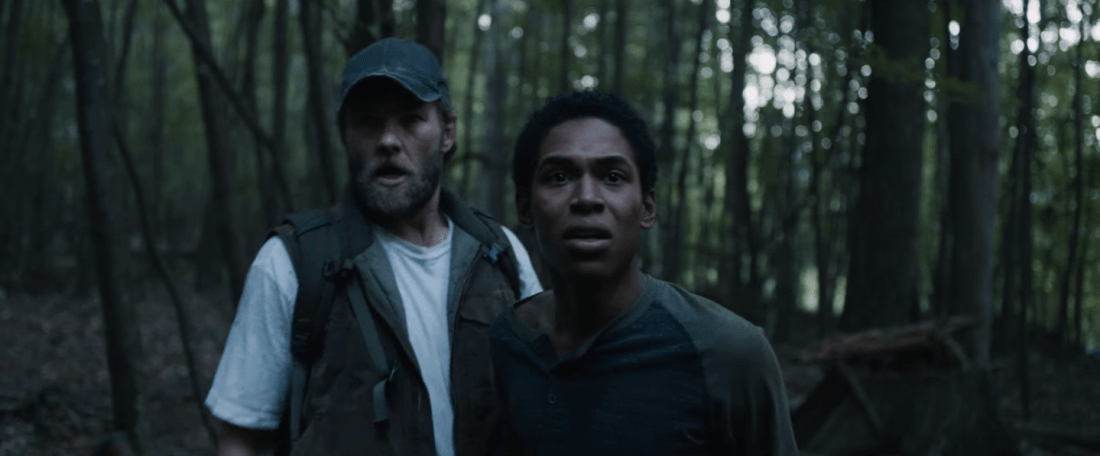
The great danger in telling a story this way is to unintentionally allow the characters to become abstract ciphers. Abstraction has its place, but it tends to weaken the story’s stakes, and make the characters unrelatable. Movies are uniquely positioned to communicate character depth through visual means, in addition to traditional tools of language. When there is a reprieve for deeper dialogue in It Comes At Night, it’s powerful. Only a couple scenes contain specific character backstory; the rest is all survive, survive, survive. The backstory adds welcome shading, yet does not fully explain the characters’ behavior. We are given a little treat of deeper humanity, but it is no breadcrumb trail to a ‘larger meaning’. There is no overarching allegory. The horror is primary. We are present and focused on the horror, just like the characters. We are drifting without an anchor, but that is precisely where the artist intends for us to be. Unsteady, unbound, experiencing new depths of horror in this family’s nightmare.
 Phil Gross, Game Designer
I hate it. I get what they’re doing but I dont like it. I need answers!! **pounds my fist into my palm**
LikeLiked by 1 person